

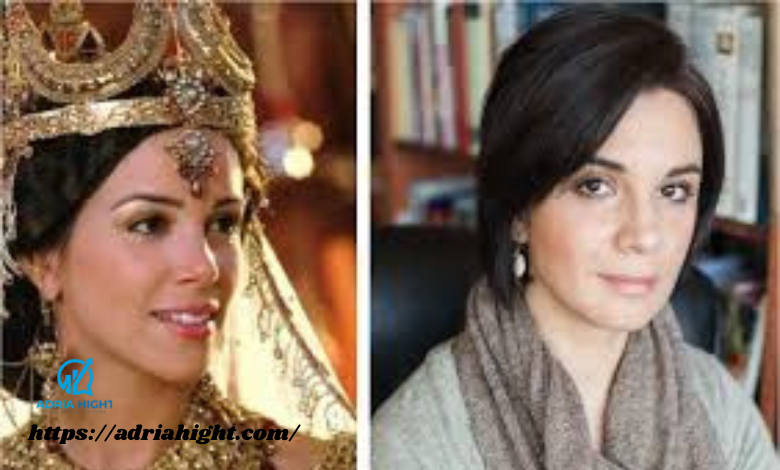
The name Charo Washer is synonymous with modern missions, yet her personal story is one of deep, quiet transformation that resonates far beyond the pulpit. While many recognize her as the wife of the world-renowned evangelist Paul Washer, Charo’s own narrative—marked by international upbringing, a high-stakes missionary career in South America, and a profound late-in-life spiritual awakening—is a compelling testament to the power of authenticity in faith.
Born in Lima, Peru, and raised across several Spanish-speaking nations, Charo’s life has always been a blend of cultures and convictions. However, it wasn’t until decades into her “professional” Christian life that she experienced what she describes as her true conversion. This article delves into the biography of Charo Washer, exploring her early years, her pivotal role in the HeartCry Missionary Society, and the personal testimony that has touched thousands of believers worldwide.
Quick Biography: Key Details
| Detail | Information |
| Full Name | Rosario “Charo” Washer |
| Place of Birth | Lima, Peru |
| Nationality | Peruvian / American |
| Profession | Missionary, Author, Photographer |
| Spouse | Paul Washer (m. 1993) |
| Children | 4 (Ian, Evan, Rowan, Bronwyn) |
| Known For | HeartCry Missionary Society & “Becoming Esther” |
| Education | Bible College Graduate |
| Residence | Roanoke, Virginia, USA |
Early Life and Multicultural Roots
Charo Washer’s upbringing was anything but ordinary. Born to a Spanish father and a Peruvian mother in Lima, Peru, she was immersed in a diverse cultural environment from day one. Her family’s journey took her through Spain, Bolivia, and Paraguay, providing her with a unique worldview and a natural talent for languages—a skill that would later become a cornerstone of her missionary work.
Despite growing up in what she describes as a “moral home,” Charo did not initially come from a background of deep evangelical fervor. Her parents taught her right from wrong, but the spiritual spark that would later define her life was still in its infancy. It was during her time at a Christian school in Peru, surrounded by missionary children, that she first began to “fit the mold” of a believer, though she would later reflect on this period as more of a social adaptation than a spiritual rebirth.
The Call to Missions and Life in Peru
By the age of 16, Charo felt a strong inclination toward the mission field. Like many young people in her circle, she was drawn to the romanticism of international service and the noble goal of sharing the Gospel. This led her to attend the Word of Life Institute in Argentina, where she further solidified her identity as a missionary-in-training.
You may like also to read about Alexa Marie Aikman: Bio, Age, Family, and Incredible Lifestyle 2026
Meeting Paul Washer
In the late 1980s and early 1990s, Paul Washer was a young, zealous missionary working in the rugged terrains of Peru. It was here that their paths crossed. Their relationship was built on a shared passion for the Peruvian people and the Great Commission.
- Overcoming Obstacles: Their journey to marriage wasn’t without hurdles; Charo’s father initially had reservations about Paul’s intense dedication to his mission.
- Marriage: The couple wed in 1993, beginning a partnership that would see them serve together in Peru for over a decade.
During these years, Charo was far more than a “missionary’s wife.” She was a linguist, a translator, and a direct participant in the efforts to plant churches and support indigenous leaders through the HeartCry Missionary Society, which Paul had founded in 1988.
The Turning Point: A Radical Testimony
Perhaps the most famous aspect of Charo Washer’s life is her 2004 testimony. Despite having a “perfect Christian resume”—including graduating from Bible college and serving as a missionary for 12 years—Charo came to a startling realization during a sermon her husband was preaching in Texas.
She realized that while she had been doing the “work” of God, she had never truly known the “God” of the work. She described her previous life as a “work of the flesh,” motivated by the love of her social group and the desire to be a “good person.”
“I simply prayed a prayer when I was 14… I didn’t have any form of repentance in my heart. At 32, I finally came to know the Lord.” — Charo Washer
This radical honesty shocked many who knew her but also provided a powerful bridge to others who felt they were merely “going through the motions” of religion. Since then, her story has been used as a primary example of the difference between cultural Christianity and a genuine spiritual transformation.
Life with the HeartCry Missionary Society
While Paul Washer is the face of HeartCry, Charo has remained a vital pillar behind the scenes. The organization, now based in Roanoke, Virginia, supports hundreds of indigenous missionary families in over 60 countries.
Contributions and Skills
Charo’s contributions to the ministry are multifaceted:
- Linguistic Expertise: Her ability to bridge English and Spanish-speaking cultures has been invaluable for the society’s South American operations.
- Photography: A gifted photographer, she has captured the faces and stories of missionaries worldwide, helping donors and supporters connect with the mission on a visual level.
- Writing: She co-authored the impactful article “Becoming Esther,” which challenges young women to seek a life of purpose and godliness rather than worldly vanity.
Family Life and the Next Generation
In 2010, the Washer family moved to Virginia to centralize HeartCry’s operations. Charo’s primary focus shifted toward raising their four children: Ian, Evan, Rowan, and Bronwyn.
She is often described by those close to her as a woman of profound humility. Despite her husband’s global platform, she avoids the limelight, focusing instead on her family and local ministry. This balance of public legacy and private devotion has made her a role model for many women in the Reformed Baptist community.
As we reach the conclusion of this exploration into the life of Charo Washer, we look at her enduring influence on modern Christian womanhood, her specific creative contributions, and the legacy she continues to build alongside her family in Virginia.
The “Becoming Esther” Philosophy
One of Charo’s most significant written contributions to the global church is her involvement in the “Becoming Esther” message. In a world increasingly dominated by social media and external appearances, Charo’s perspective offers a counter-cultural call to young women.
The core of this philosophy is based on the biblical Queen Esther, focusing on internal preparation over external validation. Charo emphasizes:
- The Beauty of Character: Prioritizing the “unfading beauty of a gentle and quiet spirit.”
- Purpose Over Fame: Understanding that Esther was placed in the palace “for such a time as this,” not for her own glory, but for the salvation of her people.
- Discipline and Training: Just as Esther underwent a year of preparation, Charo encourages young women to view their youth as a time of spiritual and practical seasoning for future service.
Creative Ministry: Photography and Narrative
While she is often recognized through her husband’s ministry, Charo is a talented artist in her own right. Her photography has served as a silent but powerful narrator for the HeartCry Missionary Society.
By capturing the raw, authentic lives of indigenous missionaries in the jungles of the Amazon or the streets of Eastern Europe, her lens provides a window into the reality of the Great Commission. This visual storytelling has been instrumental in helping the global church pray specifically and passionately for those on the front lines.
The Washer Family Today: Life in Roanoke
Since relocating to Roanoke, Virginia, in 2010, the Washer family has lived a relatively quiet life despite their international reach. Charo’s role as a mother to four children—Ian, Evan, Rowan, and Bronwyn—has been her primary mission field in recent years.
The family remains deeply rooted in their local church community. Those who interact with them often remark on their “normalcy” and hospitality. Charo is known for being an active listener and a mentor to younger women, often sharing the lessons learned from her years on the mission field and her late-in-life conversion.
Core Values of the Washer Household
| Value | Practical Application |
| Hospitality | Opening their home to traveling missionaries and local students. |
| Discretion | Maintaining a private family life despite a public ministry. |
| Theological Rigor | A commitment to deep, biblical study in daily life. |
| Global Focus | Keeping the needs of the unreached at the forefront of family prayer. |
Why Charo Washer’s Story Matters
The biography of Charo Washer is more than just the story of a missionary’s wife; it is a case study in spiritual integrity. Her willingness to publicly admit that her early years of ministry were performed without a true saving knowledge of Christ is a rare display of vulnerability in the world of high-profile ministry.
Her life serves as a reminder of several key truths:
- Activity is not Life: One can be busy with “Christian things” and still miss the person of Christ.
- It is Never Too Late: Her conversion at age 32, after years of mission work, shows that God’s grace is not bound by our timelines.
- The Power of Small Things: Much of Charo’s impact has come through motherhood, photography, and quiet service—roles that are often undervalued but have eternal significance.
Conclusion: A Legacy of Grace
Today, Charo Washer continues to support the work of HeartCry and her husband’s itinerant ministry while remaining a steady, godly presence for her children and her community. Her journey from the streets of Lima to the heart of a global mission movement is a narrative of grace that continues to inspire believers to seek a deeper, more authentic relationship with the Divine.
Whether through her writing, her photography, or her testimony, Charo remains a beacon for those seeking to live a life of “quiet impact.” Her story proves that the most powerful movements often begin with a single heart being made new.
